In Search of Common Ground
We sat down with Zari Harat to discuss her creative process, the role of music in her paintings, and why she believes art can reveal what people share rather than what divides them.
Zari Harat's paintings begin long before she enters the studio. In notebooks, conversations, unfamiliar cities, and moments that most of us would forget. We spoke about belonging, memory, why abstraction can sometimes be more honest than realism, and the importance of leaving room for people to find themselves inside a painting.
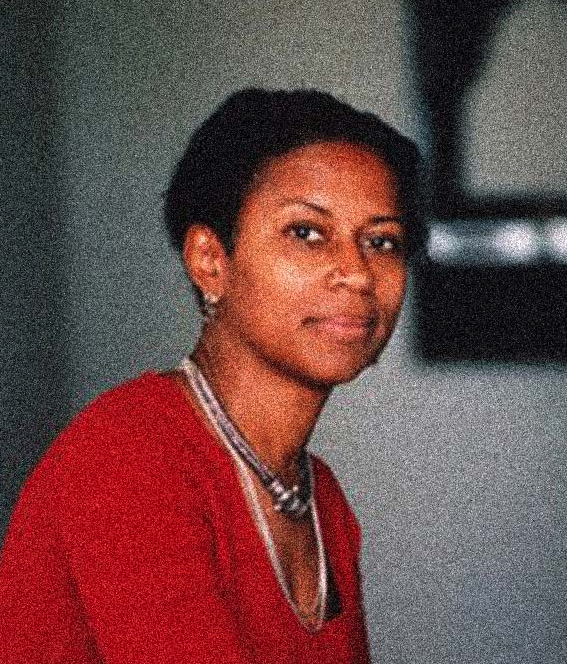
Your work often explores belonging. Has that always been at the center of your practice?
I don't think I chose the subject—it chose me. I grew up between different cultures, countries, and ways of seeing the world. When you spend your life moving between places, you naturally become interested in what people have in common rather than what separates them.
Art became a way of making sense of that experience. I'm less interested in identity as a label and more interested in the moments where people recognize something of themselves in someone else's story. Those moments are quiet, but they're incredibly powerful.
Your paintings are abstract, but they still feel deeply personal. Where do they begin?
Usually with something very ordinary. A conversation on the train, a dream I almost forgot, the way sunlight falls on a building, or a sentence someone says without realizing it will stay with me.
I carry sketchbooks everywhere because I don't trust my memory very much. If something moves me, I write it down or draw it immediately. Later, in the studio, those fragments begin talking to one another. They lose their original form and slowly become something else.
By the time a painting is finished, it's no longer about one specific memory. It's about a feeling that many people can recognize.
Music seems to play an important role in your process.
Absolutely. I almost never work in silence.
Music gives the paintings their rhythm. Sometimes I think of brushstrokes almost like musical phrases—they speed up, slow down, repeat themselves, disappear, and come back differently. Even when a painting looks calm, there's usually movement underneath it.
Color works in a similar way. I don't choose colors because they look beautiful together. I choose them because they carry emotional weight. Sometimes a painting tells me it needs less, not more.
Your work often speaks about healing, but never in a sentimental way. What does healing mean to you?
I don't think healing means forgetting difficult things. It means being able to look at them without turning away.
We're living through a time where people are constantly encouraged to take sides. Art gives us a rare opportunity to pause before we judge. To simply look. To be curious instead of certain.
If someone leaves one of my exhibitions feeling a little more open than when they arrived, then I think the work has done something meaningful.
After so many years of making art, what still keeps you curious?
The fact that I still don't completely understand painting.
Every time I think I've figured something out, the next canvas reminds me that I haven't. It's very humbling. The work is always a conversation, never a conclusion.
I still get excited by accidents. By colors I didn't expect. By marks that couldn't have been planned. Those surprises remind me that painting isn't only about control—it's also about trust.
"The most meaningful paintings don't tell people what to think. They remind them of something they already carry within themselves."
